Introduction
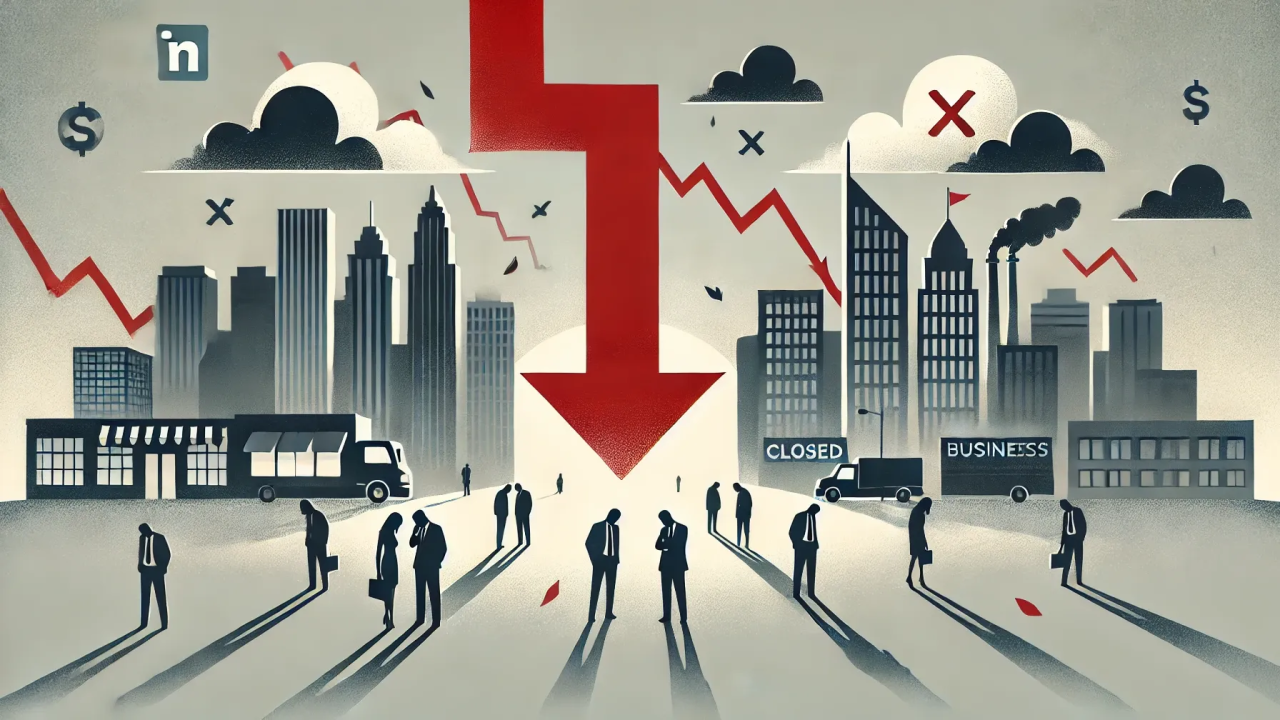
We may not have heard the official word yet, but all the signals are there. From declining GDP to a surge in the trade deficit and collapsing consumer confidence, the U.S. economy is flashing red—and the downturn may already be here. If we wait for economists to ring the bell, we may be months behind the curve.
This article unpacks how recessions are actually defined, what the latest numbers are saying, and why 2025 could quietly go down as the year the recession began—while most people were still debating if it was real.
What Counts as a Recession?
There are two primary definitions of a recession—one simplified, the other more nuanced:
1. The Rule-of-Thumb Definition If real GDP shrinks for two straight quarters, the economy is said to be in recession. It's a fast, understandable signal—but it doesn’t always reflect what's happening on the ground.
2. The Official NBER Approach The National Bureau of Economic Research (NBER) relies on a broader set of monthly indicators. They look for sustained declines across these areas:
Real personal income (excluding government support)
Payroll employment
Real consumer spending
Industrial production
Inflation-adjusted wholesale and retail sales
If several of these start dropping—and stay down for more than a few months—they declare a recession. But usually only in hindsight.
Where We Stand: March 2025
Since January 20, 2025, several key economic indicators have started to slip:
GDP is projected to contract by 2.0% in Q1
Inflation rose to 2.8% in February
Consumer sentiment plunged to 57.9, the lowest since 2022
The trade deficit ballooned to $131.4 billion in January
The S&P 500 entered correction territory (down 10%) mid-March
Unemployment remains low at 4.1%, but hiring momentum is slowing
In short, the engine is still running, but it’s losing power. And we’re already seeing warning lights across the dashboard.
One particularly sharp signal: the ballooning trade deficit. A $40 billion jump in one month—driven by increased imports and slowing exports—isn’t just a statistical hiccup. That kind of imbalance subtracts directly from GDP and weakens domestic producers. When demand shifts toward foreign goods and capital flows outward, it puts strain on manufacturing and supply chains here at home. In recession math, this is one of the most immediate drags.
It’s also worth noting that this growing imbalance isn’t happening in a vacuum. Around the world, countries are ramping up tariff policies and retaliatory trade restrictions. The U.S. is part of this escalation—raising tariffs on imported goods while facing higher barriers abroad. That global trade tension is choking the flow of exports, raising input costs for U.S. manufacturers, and making inflation more stubborn than it would otherwise be. It’s a negative loop: fewer exports, pricier imports, and higher economic friction, all during a fragile recovery window.
Looking Ahead: A Reasonable Forecast
If current conditions persist, we could see:
Another GDP decline in Q2, possibly in the –0.5% to –1.5% range
Unemployment ticking up to 4.6%–5.0% by summer
4 of the 5 core NBER recession indicators confirming downward trends
That would make a formal recession call in Q2 or Q3 likely—even if it’s retroactive.
Why It Matters
This isn’t just about markets or headlines. Recessions affect people’s lives. They shape business decisions, stall hiring, shrink savings, and feed anxiety. Consumers pull back. Companies pause investments. Governments struggle to strike the right policy tone.
And yet, despite mounting evidence, no one wants to say the word. Not the Fed. Not the administration. Not most analysts. Because naming it makes it real.
But the data is already doing the talking.
A Reality Check for 2025
If you're waiting for someone official to confirm the downturn, it might be too late by the time they do.
We don’t need panic—but we do need preparation. The earlier we recognize the signals, the better our ability to respond. Business leaders, policymakers, and citizens all benefit from calling things what they are—especially when they’re still unfolding.
So what would a smart response look like?
To guide us out of a recession, the U.S. needs to get proactive—not reactive. That means thoughtful fiscal stimulus aimed at working families and small businesses. It means infrastructure projects that create durable jobs. It means clear communication from the Fed and a serious look at interest rate flexibility. And above all, it means trust-building policies that restore confidence in the economy from the bottom up—not the top down.
This is a moment for leadership—not slogans.
Let’s keep this honest. And let’s keep it smart.