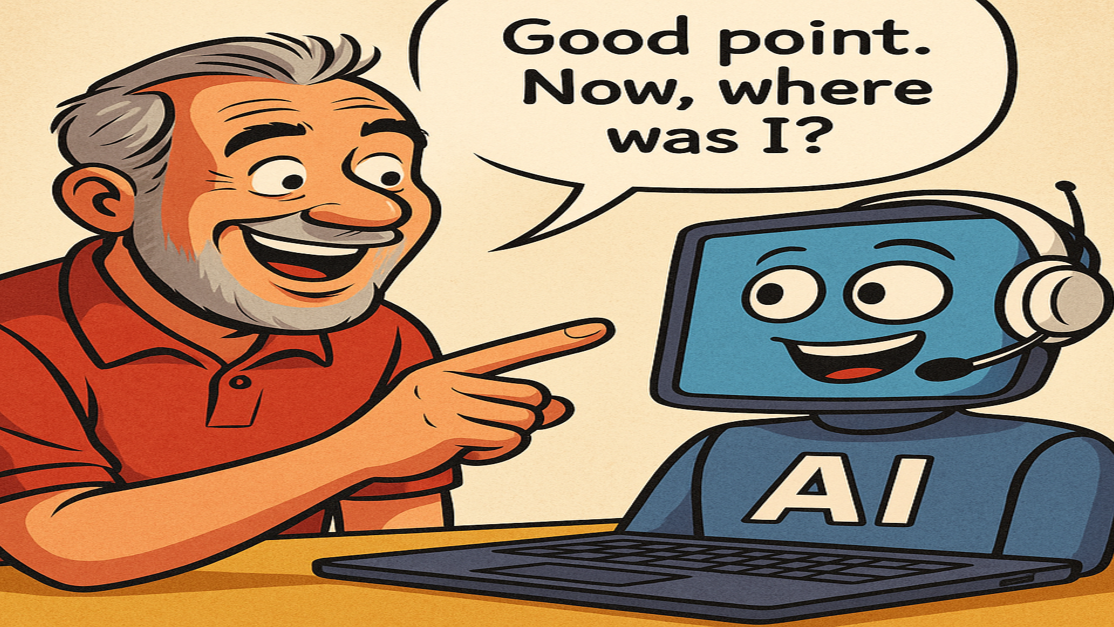
Getting the Most Out of AI: My Journey in Collaboration
AI is not a replacement for human intelligence; it’s a tool to enhance it. Over the last several months, I’ve been working closely with AI, specifically ChatGPT, and what I’ve learned is this: AI doesn’t take away from my thinking or memory — it enhances it. There are studies out there suggesting that when we use AI tools, our brain speeds up in response to the conversation, but we may not retain all the details as we would if we were working through it manually. This may be true to some extent, but here's the twist: instead of it being a disadvantage, I see it as freeing up my brain for deeper thought and faster connections.
At first, using AI felt like a shortcut. I could pull up information in an instant. But soon enough, I realized something more profound was happening. By having immediate access to vast amounts of data, I could stop worrying about how to retrieve information and start thinking about how to use it. AI wasn’t replacing my thinking; it was giving me the space to think better.
Let’s Not Forget to Laugh Along the Way
Before we dive deeper into the practicalities of AI, a little humor to keep things grounded. Did you hear about the guy who invented throat lozenges? He passed away a few weeks ago, and when they went to bury him, people kept asking, “Where’s the coffin?” It's a reminder that, even in the midst of something serious like AI and technology, we can still find moments to laugh and connect.
AI Frees Up Cognitive Space
One of the most profound impacts AI has had on my work is the way it’s freed up cognitive space. With AI handling repetitive tasks like research, fact-checking, or generating initial drafts, I’ve been able to shift my focus to higher-level thinking. Instead of getting bogged down in the details, I can use my mental energy for creative exploration. Whether it’s coming up with new ideas for articles or refining complex arguments, I’m thinking more deeply and more effectively.
For example, AI helps me manage and synthesize large amounts of data, which would otherwise be overwhelming. In the past, I might have spent hours diving into sources, searching for quotes, or re-checking facts. With AI, I can delegate those tasks, freeing me to focus on connecting dots, synthesizing information, and tackling larger questions — like how a simple thing like bananas is tied to global economics, geopolitics, and history.
Memory: Not Lost, Just Organized
There’s a lot of talk about AI causing memory problems. But in my experience, it’s not that my memory is failing — it’s that AI is organizing information in a way that I simply couldn’t before. In fact, it’s allowing me to access my own memory bank more effectively. For example, I often work on long-term projects, like my memoir or my ongoing series on quantum computing, and AI helps me keep track of everything without having to remember every detail. Instead of relying on my own mental archive, I can now use AI as a memory system, pulling up relevant information instantly without worrying about forgetting something important.
That’s not to say I’m not still engaging with my thoughts. In fact, I’m engaging more. I can ask questions, explore possibilities, and test ideas at a speed and scale that I never could before. AI doesn’t diminish my ability to remember; it enhances how I retrieve and apply what I know.
One of the ways this works for me is through speed reading. I find that as I watch AI-generated content scroll down, I take it in, process it, and think about it in real-time. It’s like flipping through a book at 110 miles an hour — I don’t always retain everything, but I can certainly riff on it, bring out ideas, and use it as fuel for further exploration. Sometimes, I’ll only need to keep a concept in mind long enough to make a point or go down a new path, and that’s enough for me.
Collaborating with AI: Sharpening My Critical Thinking
At the heart of my work with AI is collaboration. Some might worry that AI dulls critical thinking, but for me, it’s the opposite. AI pushes me to ask better questions and dive deeper into topics that I might have otherwise skimmed over. When I’m working on an article, I don’t just ask AI for answers — I ask for suggestions, counterarguments, and different perspectives.
That back-and-forth, where I coach AI and refine its output, helps me sharpen my own critical thinking skills. I’m in charge of the direction, and AI provides the fuel that keeps me thinking outside the box. Whether I’m discussing political theory or quantum computing, AI acts as a thought partner that helps me organize my ideas while keeping my brain active and engaged.
I know that sometimes, things don’t go perfectly. Memory gaps or AI hiccups can be frustrating, especially when you’re working at full speed. There have been moments when I feel like my brain just comes to a halt when I encounter a memory issue or when a piece of AI-generated content isn’t where I need it to be. In those moments, I’ve learned that it’s essential to have contingent plans. Whether it’s reviewing the data together, asking new questions, or breaking down the task into smaller steps, I know how to recover, move forward, and get back to work.
The Power of Reflection and Active Recall
Finally, working with AI has also helped me improve my own memory. Not by storing everything for me, but by encouraging active recall and reflection. When I go back and review the work we’ve done together, I’m reminded of ideas and insights I might have missed the first time. That process of revisiting and refining helps me reinforce what I’ve learned and make stronger connections to other ideas I’ve encountered over the years.
Conclusion: Embrace the Enhancement
In the end, AI is an enhancement, not a replacement. It gives me the freedom to focus on what matters most: thinking, creating, and problem-solving. If you're starting out with AI, don’t be afraid to dive in, ask questions, and find your own way to collaborate with it. Like any tool, it’s all about how you use it. With the right mindset, AI can become your greatest ally in the quest for smarter, faster, and more creative thinking.
Final Thoughts (and ChatGPT’s Joke)
Before wrapping this up, a bit of levity to finish: Why don’t skeletons fight each other? They don’t have the guts! (Just a bit of levity from ChatGPT, not Phil!)
And remember, AI may not have the guts, but it’s here to help you tackle tough problems and brainstorm new ideas with ease. It’s about collaboration — we’re in this together.