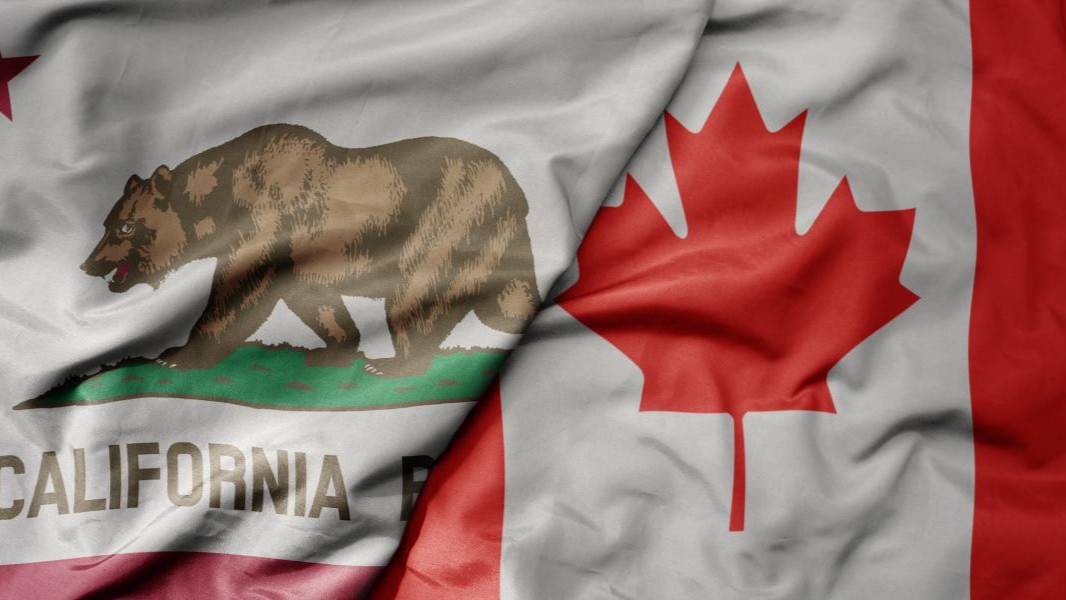
In an age where the unthinkable has become ordinary, the idea that California could secede from the United States and join Canada isn't just fantasy fiction anymore—it's the logical endpoint of a century-long identity crisis. What would happen if the world's fourth-largest economy, a cultural superpower and climate vanguard, broke free from a fractured republic and found new footing under the maple leaf?
Let's walk through the shockwave.
Legality and Process: A Tightrope Over Fire
Under current U.S. law, secession is outright illegal. The Supreme Court ruled in 1869 that states don't have the right to leave the Union. The only legal path? A constitutional amendment, requiring two-thirds approval in both houses of Congress and ratification by 38 states—effectively impossible.
But what if California pushed harder—through a referendum, legislative fiat, and a political campaign that gripped the world? Would the U.S. federal government move to block it militarily? Or would it calculate that trying to hold on to California, a state that no longer shares its national vision, is more dangerous than letting go?
Canada’s side of the story is cleaner. The Constitution Act of 1867 allows for the admission of new provinces. The Clarity Act of 2000, drafted in response to Quebec’s sovereignty movements, provides the roadmap. Canada would demand a clear majority vote and a defined question. But if California passed that test, and Ottawa saw alignment in values and long-term benefit, the process could begin.
Politics: A Bomb in Washington, a Shockwave in Ottawa
California’s departure would ignite a constitutional and political firestorm in the United States. With 54 electoral votes, it is the anchor of Democratic power. Its exit would likely consolidate GOP dominance at the federal level for a generation. That might seem like a win for conservatives—until they face the economic and geopolitical cost.
In Canada, the reaction would be jubilant and then fraught. At first, California’s arrival might feel like a liberal dream: environmental leadership, tech wealth, cultural capital. But practically, it would mean parliamentary reform, a new Senate structure, and fierce debate over federal funding priorities.
Alberta and Saskatchewan would howl. Quebec might recalibrate. Atlantic provinces would fear marginalization. Overnight, Canada would go from modest federation to global heavyweight. Not everyone would celebrate.
Economics: A Superpower Marries a Quiet Giant
California’s GDP—$4.2 trillion USD—would nearly double the Canadian economy overnight. Toronto might still have Bay Street, but Silicon Valley, Hollywood, and the Central Valley’s agricultural might would instantly become Canadian assets.
But here’s the catch: California sends about $450 billion annually in federal taxes to Washington. Under Canadian federalism, provinces both pay into and draw from the system through equalization and transfer payments. Given California’s wealth, it would be a net contributor—but far less than under the U.S. model.
Conservatively, California might only owe $150–200 billion CAD in net transfers to Ottawa, creating a $250–300 billion annual fiscal dividend for the new province. That difference could be reinvested in infrastructure, climate transition, healthcare, and education.
California would no longer fund America’s wars or tax cuts for billionaires in West Virginia. Instead, it would fund dental care in Manitoba and high-speed rail in BC.
Cultural Identity: An Uneasy Harmony
California and Canada already align on many values—climate action, LGBTQ+ rights, public health, science. But there are cracks beneath the harmony. Guns, for one. California is strict by American standards, but Canada is stricter still. Healthcare would require a dramatic restructuring. Canadian federal law demands public delivery; California’s massive private sector would need to adapt—or die.
And what about the military? California hosts major U.S. bases. Would they be repatriated? Would the U.S. demand compensation—or threaten force? Canadians are not known for militarism, but American fury can be theatrical and real.
Trump’s reaction, in particular, would be volcanic. If this scenario began to move from online petition to legislative motion, he would rage. He'd label it treason, perhaps threaten sanctions, federal military occupation, or declare martial law. His base would demand blood. He might even attempt to rally a nationalistic uprising. Whether the rest of the U.S. would follow him—or decide California is better off gone—is the central gamble.
Borders, Bureaucracy, and Backlash
A new international border stretching 1,300+ km would emerge overnight. Immigration, customs, cross-border trade, and defense treaties would need complete overhaul. NORAD, Five Eyes, and the USMCA trade agreement would all have to be renegotiated.
Currency conversion could be economically traumatic unless California adopted a dual-currency phase or convinced Ottawa to rethink monetary policy. Either way, business would face chaos in the short term—and opportunity in the long term.
Expect international consequences. China and Russia would exploit the fracture. The European Union might hesitate to intervene diplomatically, but would likely welcome the economic normalization. The global markets would panic at first, but if the split were peaceful, they’d adapt.
Final Word: A Fiction Worth Watching
This scenario is still fiction, but no longer implausible. In a world of rising authoritarianism, collapsing institutions, and deep cultural rifts, bold alternatives become more imaginable. The idea that California might one day prefer Ottawa to Washington is no longer absurd.
Whether Canadians—and Americans—are ready for that shift is the only real question left.
This is the future knocking. Will anyone answer?