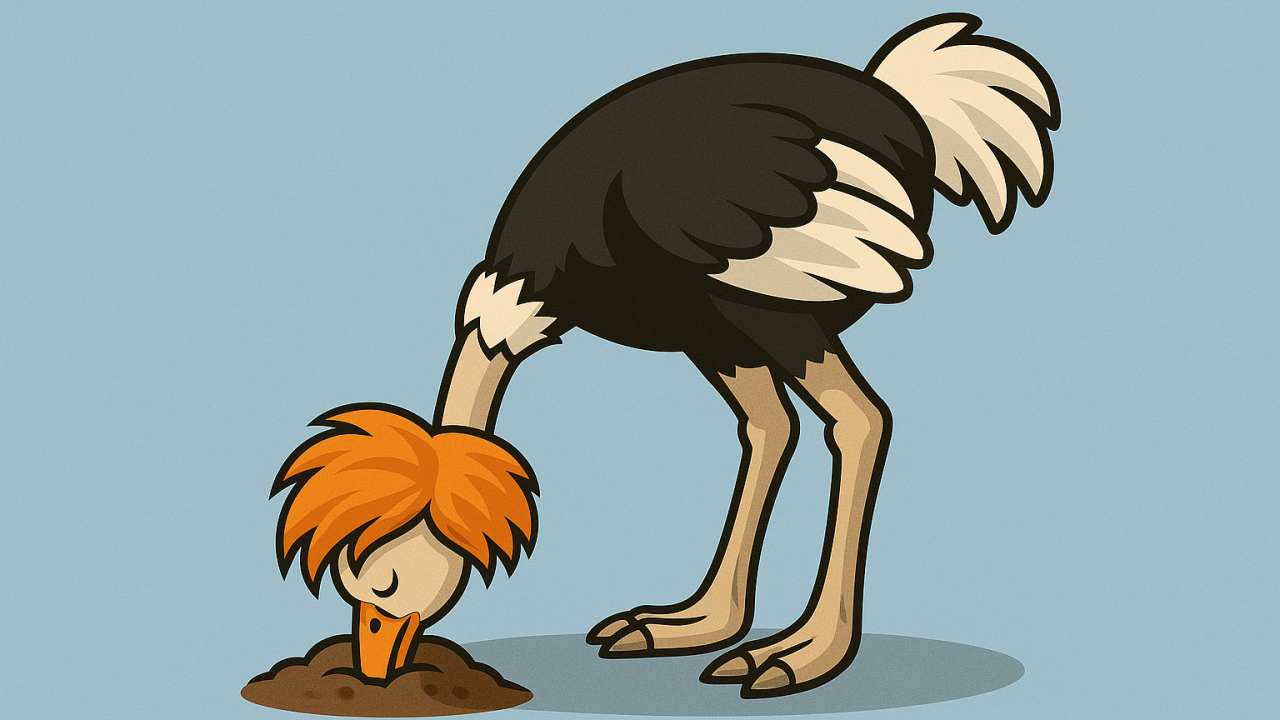
In a world once held together by treaties and mutual deterrence, the unravelling of nuclear norms is accelerating—and the two largest nuclear powers are responsible.
1. The Consequences of the United States Breaking Its Treaty Promises The post-World War II global order relied heavily on U.S. security guarantees. NATO allies, Japan, South Korea, and others built their foreign policy, military spending, and diplomatic posture on the assumption that the United States would show up when it mattered. When the U.S. walks away from long-standing alliances, abandons treaty obligations, or signals that it will no longer underwrite global security, it sends a simple message: "You're on your own."
This abandonment doesn’t just fracture trust—it detonates it. It forces allies to rewire their defence thinking overnight. Coalition deterrence is out. Lone-wolf survival is in. And when building a conventional army takes decades while a nuclear deterrent takes months, we should not be surprised at what comes next.
One of the most dangerous shifts has come with the United States abandoning its controversial—but crucial—role as “the world’s policeman.” Yes, that role was resented. Yes, it was overplayed. But it carried weight. Predictability. A visible spine. Its absence has created a power vacuum. And history is unambiguous about what happens when vacuums form. Everyone starts reaching for sharper weapons.
The trust deficit is now systemic. Allies who once relied on U.S. strength are scrambling to reassess their own vulnerabilities. Rivals are emboldened. And nations that used to stay quiet are quietly shopping for nuclear options. The world’s diplomatic architecture is showing its cracks—not from hostile action, but from abandonment.
The symptoms are everywhere: withdrawals from Syria and Afghanistan without coordination, erratic negotiations with North Korea, public questioning of NATO’s Article 5, halting arms shipments to Ukraine in the middle of a war, and degrading the bonds with key allies like South Korea and Japan. What these signal is not just inconsistency—but chaos. A country no longer speaking with one voice.
To restore trust, the United States cannot simply pivot. It must re-anchor. That means binding treaties, long-term strategic frameworks that outlast individual administrations, renewed investments in multilateral institutions, and forward-deployed leadership—not just in force, but in principle.
Is Trump the man to lead that effort? The record is brutally clear. His foreign policy playbook is disruption over diplomacy, loyalty over legality, and impulse over intelligence. He deals in unpredictability, which makes him impossible to align with. He treats alliances as leverage and treaties as disposable. That may score points on a talk show. It does not hold up in the arena of nuclear risk.
Trump operates on a zero-sum model: if you win, I must be losing. He rewards obedience, punishes dissent, and listens to instinct over expertise. His diplomacy is personal, not institutional. Allies are judged by their flattery, not their value. That is not how you rebuild trust. That is how you dismantle it.
And we must not overlook the elephant in the room: distraction. Trump, or any leader returning to office under siege from multiple legal and domestic fronts, will be governing under maximum stress. Legal warfare. Civil unrest. A fractured Congress. Economic polarization. He won’t be staring down the threat of nuclear escalation with a clear head. He’ll be reacting—possibly under pressure, possibly alone.
2. The Consequences of Russia Breaking Every Treaty Promise If American inconsistency shakes the system, Russian deception smashes it. Since the Cold War, Russia has systematically unravelled every major security agreement it signed. The Budapest Memorandum. INF. Conventional Armed Forces in Europe. Ceasefires in Georgia, Syria, and Ukraine. All rendered meaningless.
What Moscow is signalling is not merely hostility. It is contempt for the very concept of agreement. If trust is currency, Russia is the global counterfeiter. And this has cascading effects. If even neutrality no longer protects you, then the only thing that might is a warhead of your own.
Putin has made trust a tool of warfare. He uses it to lure, mislead, and trap. From cyberattacks and election meddling to assassinations abroad and energy blackmail, his message is: trust me, and I will own you.
Could Russia rebuild trust? Not under Putin. Rebuilding would require a total retraction: withdrawal from Ukraine, renewed arms control, transparency in military and cyber ops, and a rebirth of civil society. None of that is on the horizon. Putin’s world is built on manipulation, not mutuality. He wants a battlefield, not a treaty table.
3. NATO Feeling Alone in Europe With U.S. engagement fading and Russian aggression rising, NATO sits in the middle of a collapsing bridge. Europe is preparing for the worst-case scenario: defending itself without American firepower. And if Ukraine is lost, the frontline moves west.
For nations like Poland and the Baltics, this isn’t theory. It’s reality. Their national security now requires assuming that NATO’s strongest member may no longer show up. Which makes Ukraine’s survival not just a cause but a test of Europe’s future.
4. The Containment of Russian Atomics— With or without America, American nuclear deterrence, for all its flaws, still held Russian escalation in check. Remove that deterrent, and the leash loosens. A Russia unconcerned about U.S. retaliation becomes an exponentially greater threat. Not just to its neighbours—but to the global norm that nuclear weapons are unthinkable.
5. Who Has Nukes Now? United States, Russia, China, United Kingdom, France, India, Pakistan, North Korea, and Israel (undeclared).
6. Who Could Have Nukes Within a Year? South Korea, Japan, Taiwan, Germany, Poland, Sweden, Finland, and Ukraine (if enabled). The materials, the knowledge, and the political will are either present or awakening.
7. Who Will Not Have Nukes in the Short Term? Romania, Australia, Canada, Italy, Spain, Brazil, and Argentina—due to infrastructure, legal commitments, or public opposition.
CONCLUSION: The New Fragility—and What Must Be Done
We are at the beginning of a dangerous transition. The global order that held nuclear ambitions in check is eroding fast. What replaces it will not be a clean handoff—it will be a scramble.
We still have options. Rebuild trust. Reinforce alliances. Build new treaties that reflect modern threats, not Cold War shadows. Create crisis channels that bypass chaos. Invest in cyber defences that protect command systems. Make nuclear taboo again—and mean it.
But if we do nothing, the risks don’t just rise. They multiply.
Because once a nuclear weapon is used—once the threshold is crossed—the world will not go back. Every line redrawn. Every rule shattered. Every doctrine is obsolete.
This is the call to action:
To policymakers: step back from partisanship and speak clearly—America’s word must matter again.
To allies: prepare for resilience, but don’t abandon the table. A fractured West is a gift to its adversaries.
To citizens: demand seriousness from your leaders. This is not a moment for slogans. This is a moment for spine.
Trust is not idealism. In the nuclear age, it is infrastructure. It is hard to build, easy to burn, and once lost—potentially unrecoverable.
This isn’t just strategy. It’s survival.