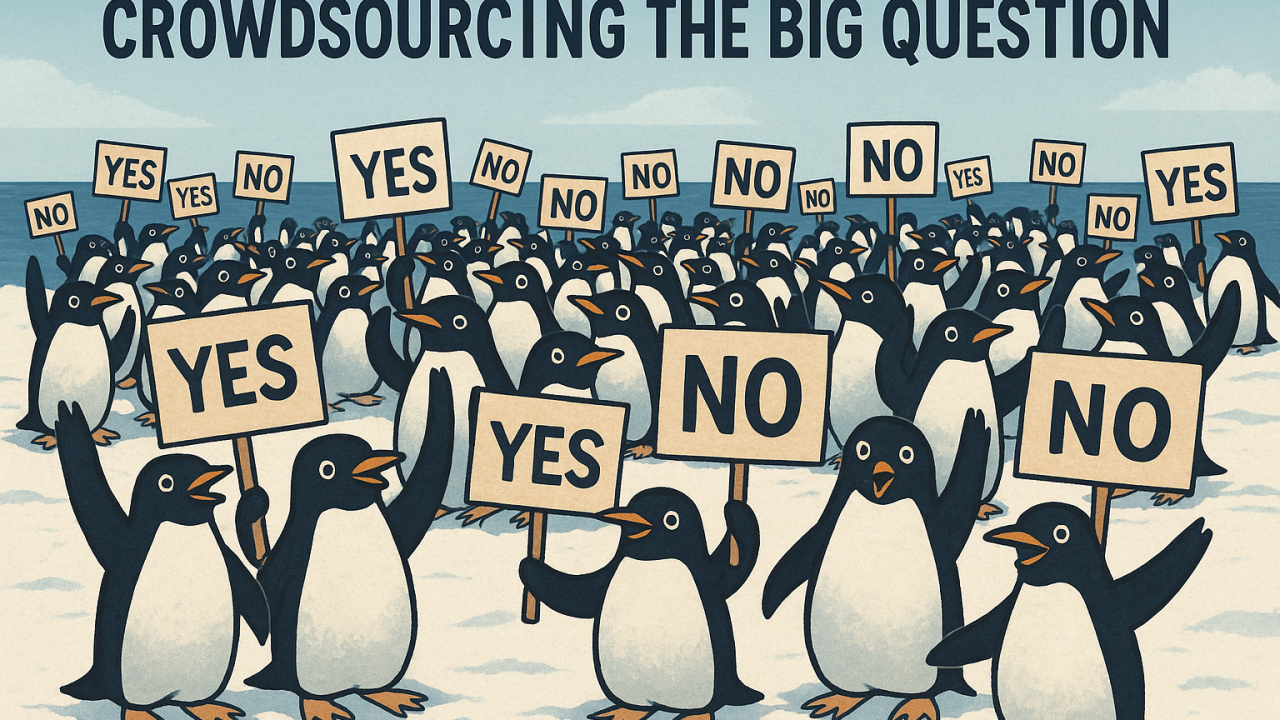
I’m a writer, and I’d like to crowdsource some perspective. Do you have any thoughts on the dilemma below?
Often I don’t know the ending of a story when I start. I just follow threads. Sometimes they knot together. Sometimes they unravel.
Lately I’ve been tugging on three threads:
1. The officers who said no. Stanislav Petrov, 1983. At a Soviet missile console, alarms blared “U.S. launch.” He called it a false alarm and held fire. Vasily Arkhipov, 1962. The lone Soviet officer who vetoed firing a nuclear torpedo during the Cuban Missile Crisis. William Bassett, 1969. A U.S. commander in Okinawa who stopped a mistaken nuclear launch order during the EC-121 standoff with North Korea.
Each refused the hammer. Each may have saved the world.
2. The skiff strike. Recently, a Venezuelan skiff was destroyed in the Caribbean by U.S. fire. Eleven dead, according to Washington. The boat may have carried drugs, or not. What’s clear is that it turned back before the strike and was hit anyway. No boarding, no arrest, no trial. Just the hammer: swift, decisive, irreversible.
3. The philosophies. Sun Tzu is studied at West Point. Clausewitz is studied in China. Both sides know the same words. But one officer reads them through an American lens: action, projection, hammer. The other reads them through an Eastern lens: positioning, arrangement, shaping the field so the outcome is inevitable before the clash. Same texts, different imperatives.
So what happens when two officers sit across the table, both playing a deadly game, but each playing by different rules? When hammer meets positioning, what does that do to the outcome?
I don’t know yet how these threads tie together. Maybe they don’t. But I suspect they say something about power, reflex, and what happens when doctrine and culture collide.
So let me ask, and I’d love to crowdsource your perspective:
Do we even recognize when we’re using the hammer by reflex rather than by choice?
In your own work, what’s the “Petrov moment,” the chance to say no that changes everything?
Do East and West philosophies still shape how leaders act today, or have those lines blurred?
Sometimes the best part of crowdsourcing is seeing where others spot the knots I’ve missed.