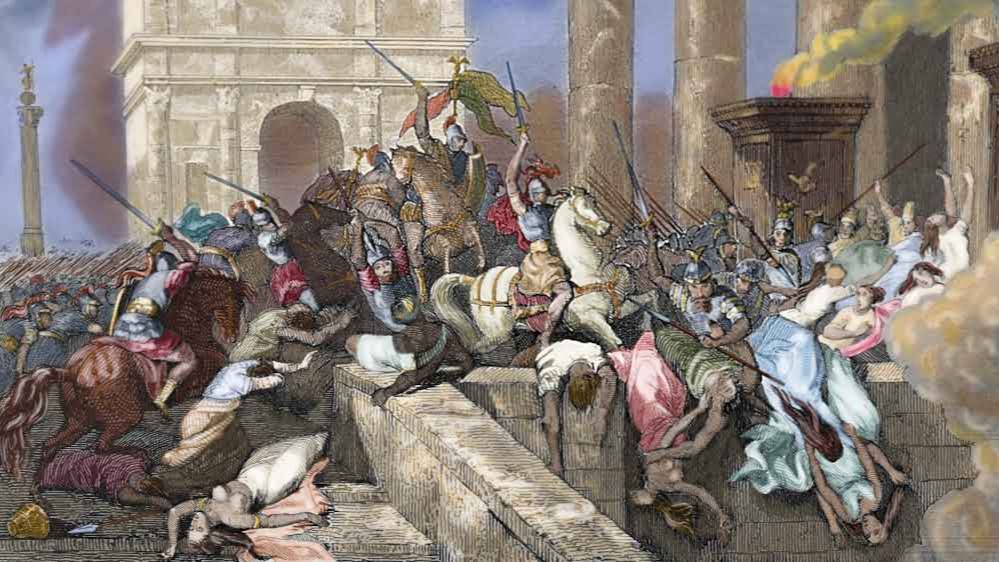
Empires don’t fall in a day. They rot from within, long before the marble columns crumble. Today, the United States stands at a crossroads that echoes the final chapters of past empires. To understand where America might be headed, we must look backward—5,000 years back—to the rise and fall of empires that once seemed as invincible as the U.S. does now.
I first started thinking seriously about this after re-reading The Story of Civilization by Will and Ariel Durant. It’s hard to spend time with their sweeping view of history and not come away humbled. The same themes keep showing up: concentration of wealth, erosion of civic duty, obsession with spectacle, and disconnection between rulers and the ruled. It’s not just Rome or Britain. It’s Persia. It’s Byzantium. It’s us.
Two empires serve as the clearest historical mirrors: the Roman Empire and the British Empire. Each holds a warning. Each holds a lesson.
Rome: The Republic That Chose Decay
Rome began as a republic with checks, balances, and civic duty. But as inequality soared and the Senate became a puppet for the rich, power centralized around charismatic strongmen. Julius Caesar didn’t kill the republic; he was simply its final symptom. The people, numbed by bread and circuses, traded their liberty for entertainment and a sense of control.
The Roman economy hollowed out. Foreign wars drained resources. The military, once loyal to the Senate, swore allegiance to individual commanders. Rome imploded not from without, but from rot within—inequality, corruption, and a loss of civic virtue.
Sound familiar?
Britain: The Empire That Outgrew Itself
At its peak, the British Empire controlled a quarter of the world. But like all overreach, it came at a cost. The homeland crumbled under the weight of maintaining global dominance. Class tensions boiled. Its moral credibility waned as its colonies rose in rebellion. And when economic shifts and rising rivals emerged, Britain found itself aging out of power.
Britain’s story isn’t about a crash; it’s about a slow, dignified decline. Relevance faded. Influence narrowed. It remains a cautionary tale about confusing legacy for entitlement.
How America Echoes Both
Today, America is showing signs of both Roman decay and British overreach:
Executive overreach and political tribalism undermine constitutional norms.
Military spending outpaces reason, even as domestic infrastructure crumbles.
The richest 1% hold more wealth than the bottom 90%, and the middle class erodes.
Global credibility is slipping, not just from rivals like China but from allies unsure what America stands for anymore.
A disengaged public scrolls while the republic smolders.
This isn’t doomsaying. It’s diagnosis. And diagnosis is the first step to treatment.
What Must America Do? A Roadmap Back from the Edge
There is still time. But time alone won’t save us. America needs a roadmap—bold, focused, and unapologetically self-correcting:
Reinvigorate Civic Education: Citizens who don’t understand democracy won’t fight to preserve it. Civics must return to the classroom and the dinner table.
Rebuild the Middle Class: Through fair taxation, strategic investment, and labor protections, America must restore broad-based prosperity.
Reform Campaign Finance: If you want to fix the system, follow the money. End the legalized bribery of special interests.
Right-size Global Commitments: Military presence must be strategic, not symbolic. America cannot police the world and fix itself at the same time.
Invest in Shared Purpose: From infrastructure to climate action, Americans need big projects worth believing in—together.
Protect the Guardrails: Courts, norms, institutions. These aren’t just tools. They’re the bones of the republic. Undermining them for short-term gain is a long-term suicide note.
Final Thought: The Choice is Now
Rome forgot what made it great: virtue and vigilance. Britain forgot humility. America’s challenge is to remember both.
Decline is not destiny. But decline becomes inevitable when a nation refuses to see itself clearly in the mirror of history. Will and Ariel Durant reminded us that civilizations are not murdered—they commit suicide.
We’re staring at that mirror now.
The edge is real.
But so is the path back.
The question is: will we take it?